
Therapy
Following are some articles related to the process of trying to help others move better and feel better. These will be of particular interest to physical therapists, massage therapists, chiropractors, athletic coaches, etc.
Why do muscles feel tight? Does that mean they are short? That they can't relax? And what can you do about it?
Here are some of my thoughts about why muscles feel tight and what to do about it.

The idea that posture causes pain has intuitive appeal, and is advocated by numerous experts. But is it supported by evidence? And should you spend time trying to analyze your own posture and correct deviations from what is considered optimal?

Graded exposure is a key concept in understanding how to reduce pain caused by movement. It's a very common sense idea, and one that most people kind of know at some level, because there is profound truth to it. But it's also an idea that most people will probably fail to put into practice in a systematic way. Here’s a brief discussion of what it is, why it works and how to do it.

In recent years, pain science has become far more widely known, and that is leading to some interesting conversation and also confusion in the fitness, massage and manual therapy communities. Lorimer Moseley and David Butler have been charismatic and influential teachers on this issue. A good example of their work is found in the popular book Explain Pain, which uses neuromatrix theory as a theoretical background. Moseley provides a very accessible and entertaining talk about pain science in this recent DVD video.

I really enjoy studying biomechanics. I find it totally fascinating to learn, for example, that a certain muscle is very well suited to stabilize a joint, but not to move it through a large range of motion; or that it is active in one movement but not another; or that it becomes atrophied in people with chronic pain. I think this kind of detective work is very cool and I always look forward to applying it to help one of my clients. But that is where things get frustrating, because with biomechanics, as with so many other subjects, the more you learn, the more you realize you don't know as much as you would like to know. And sometimes you don't know enough for your treatment protocols to make any sense.
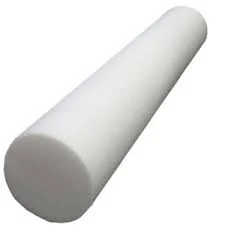
Foam rolling is very popular. Athletic trainers use it as a part of the warm-up. Physical therapists use it as part of their treatment strategy, often to improve extensibility of “short” tissues. There is very limited evidence about what benefit, if any, foam rolling confers. But there are a few studies showing it leads to short term increases in range of motion that are not accompanied by strength loss. (This is interesting because stretching interventions tend to show increased range of motion that are associated with a loss of strength and power.)


 I’ve written before on this blog about how manual therapists can develop some very questionable ideas about exactly how they are helping their clients. Like thinking they can manipulate energy fields, chakras, chi or cerebral spinal fluid patterns. Interestingly, my own observation is that many therapists who believe the craziest things actually get some pretty good results! How could this happen? How ...

Why exactly does someone feel better after massage? Or acupuncture? Or foam rolling? Or a chiropractic adjustment, or wearing K-tape, or doing mobility drills, or a hamstring stretch? There are some good answers to these questions, and the interesting thing I’d like to point out in this post is that quite often, the therapist doesn’t know them. Or even care about them!